Read time: 12 minutes
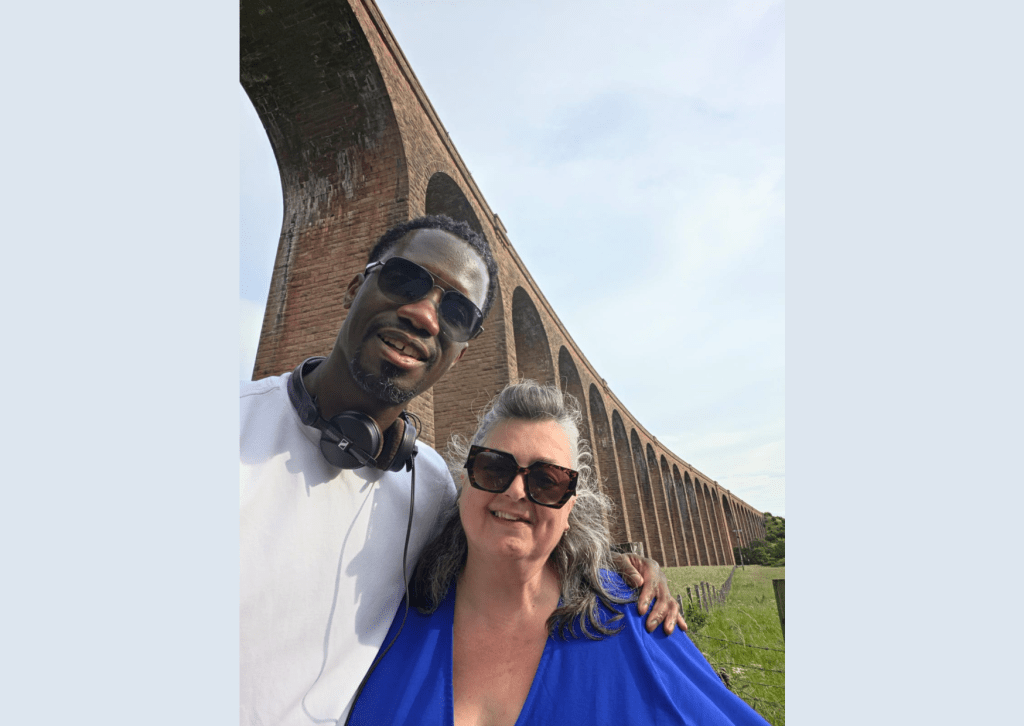
This is Alex. You might know him better as Mechanikool, the professional street dancer.
I had the pleasure of meeting Alex five years ago at the Hip Hop Weekender Dance event in London. My friend (and unofficial adopted son) Juelz had invited me along and I was feeling a peculiar mixture of excitement and nerves. I had never attended an event like this before and I felt a little bit out of place in my bright floral-patterned dress and daisy hair clip.
Alex was there as a judge for the popping element of the event. I discovered that, amongst other accolades, he was the two-times British popping champion and a well respected figure on the street dancing scene.
At first sight, he appeared to be an enigmatic figure. He was sharply dressed, wearing Ray Ban sunglasses that meant that he was giving nothing away in terms of his thoughts on the performers.
I immediately jumped to conclusions about him.
This guy was too cool. He must be full of himself. Who did he think he was?
[I should also add in here that he hadn’t reacted as positively as I would have liked to Juelz’s earlier dance so I had a bit of maternal protectiveness going on.]
Ignoring this possible bias, I sat comfortably with my assumptions about Alex until he led a popping workshop a short while later. I joined in with the workshop, feeling a little self-conscious particularly as a lot of the competitive dancers were also taking part.
Very quickly, Alex started to win me over. He had an incredible stage presence and it became apparent that he was an amazing teacher with a joyful personality.
Soon enough, I found myself doing some very basic popping moves albeit without any real technical skills, or indeed any grace, but it didn’t matter because I was having fun.
Damn him. It seemed that he was already challenging me to take a step outside of my initial responses.
A couple of hours later, Juelz and I bumped into Alex and almost before Juelz had introduced us, Alex was beaming with unfiltered enthusiasm.
I felt a rush of warmth towards him, realising that I had been wrong in my initial assessment of him. He was open and genuine, showing a real interest in what I had to say.
We had a little chat and went our separate ways but I continued to observe him for the rest of the event.
I watched as he made a point of engaging with all of the dancers from the earlier competition, speaking to them individually, giving them his full attention and offering feedback and support.
He demonstrated unlimited patience and kindness, and I found myself intrigued.
A little bit of research…
Over the next week or so, in what with hindsight might seem a little bit stalkerish, I researched him and his work.
I was really impressed with his dancing. He’s a phenomenal dancer and one of the earlier advocates for pushing the style of popping in the UK.
But what impressed me more was his content on social media and his dedication to having conversations about racism and community. I know that these types of conversations aren’t new, but Alex’s approach focused on bringing people together to reach a place of understanding rather than encouraging a clash of opposing sides as is often the case.
Now, anyone who knows me will understand that I can be quite forward and I like to give feedback to most people I meet, so I found myself messaging him on Instagram. I provided him with a full detailed analysis of what I was impressed with and before I could think too much about it, I hit the send button.
I didn’t hear back from him.
I could see that he had read my messages (yes, plural – I had a lot to say) but a couple of days passed and I started to feel a bit stupid, perhaps even embarrassed.
Who was I to think that this man needed my feedback? I found myself cringing whenever I thought about my messages to him.
And then an incredible thing happened. He replied.
At the time, it felt like his reply came weeks later but it was actually only three days – cringeworthy thoughts have a tendency to make time seem longer.
He was very positive in his response to me, ensuring that he addressed all of my points. In fact, he seemed genuinely pleased to have received my messages.
I was so happy to hear back from him and after the initial exchange of messages, I settled into watching his work from afar on Instagram.
Time goes on
Over the next year, I bumped into him again at a couple of other dance events and we had deep conversations about the complexities of culture and identity. I found him fascinating but more importantly, he was proving to be an important person whom I could learn from.
And wowsers, did I learn.
It became apparent that we were both on a journey of discovery and growth and that there was space for us to learn from each other.
I started to feel less like a fan and more of a friend.
In fact, our friendship continued to develop to the point that he became one of the first people I’d arrange to catch up with whenever I was in London.
We had previously exchanged voice notes on Instagram but at the time they were limited to one minute and we had a lot to say that couldn’t possibly fit into 60 seconds.
We switched to WhatsApp and the one-minute messages became five minute messages which soon turned into ten minutes and then fifteen minutes. And there were multiple messages exchanged at a time.
The occasional phone call resulted in conversations that lasted for hours. Our last phone call was seven hours long and we still hadn’t captured everything we wanted to say.
You might be wondering what we talked about.
We talked about the work he was doing. We talked about my experiences travelling. We talked about dancing, writing, music, politics and economics.
We talked about emotions and vulnerability, about identity and belonging.
And all of the subjects led back to the same themes of race, culture and community.
A visit to the Scottish Highlands
Throughout the years that I’ve known Alex, I’ve been keen for him to visit the Highlands and experience a completely different culture from London. Different from England. Different even from the rest of Scotland.
A combination of his commitments and my travelling lifestyle made it difficult to coordinate but we finally made it happen a couple of weeks ago.
It was an eclectic visit involving battlefields, ancient burial grounds, viaducts and harbours as well as multiple interactions with academics, tourists and locals.
Some of it was planned, some of it incidental, but all of it was fascinating.
And in the midst of it all, we attended the Inverness Highland Games.
The Highland Games
For those not familiar with the concept of the Highland Games, they are annual gatherings, held in towns and villages across Scotland involving competitions of speed, strength, music and dancing.
There are also a lot of people wearing kilts.
Any Highland Games event is an assault on the the senses. The sound of crowds cheering for athletes racing around a track competes with the traditional Scottish tunes playing in the music tent.
A plethora of tents, stalls and food trucks fill the field in which they’re held. The smell of burgers and chips mingling with the scent of wet grass, dampened by the latest shower of rain.
Modern music blasts out of the speakers from the food stalls, clashing violently with the funereal tones of pibrochs played by solitary bagpipers.
It’s a lot to take in.
Naturally, as a dancer, Alex was keen to see the Highland dancing competition.
Under the canopy of a tent, we watched scores of Highland dancers as they leapt across the stage, their feet and arms forming into shapes first displayed by warriors over 700 years ago.
These dances, once performed by men triumphant in battle, are now almost exclusively danced by young women and girls. The pretty costumes and balletic poses belying the strength and agility required for the dance.
We found ourselves stopping at the music tent every so often to listen to bands playing fiddles and accordions. We tapped our feet as the musicians switched back and forth from upbeat, rebellious music to mournful dirges full of heartache and loss.
We rushed to the athletics field to watch the full pipe band march its length, the harshness of the bagpipes regulated by the pulsing beat of the drum section.
Locals and tourists alike were visibly moved by the magical experience of seeing the pipe band up close.
The pipe band moved out of the way to allow us to watch Britain’s Strongest man lift a stone weighing 185kg almost effortlessly above a five-foot high bar. It was only when we watched the amateur competitors trying to lift it that we understood just what a feat it was.
Over the course of the day, we became experts in hammer throwing techniques, noting that the competitors who demonstrated more rotation in their hips tended to have a more successful throw.
But never were we more full of expertise than when it came to the caber toss event. If you’re unfamiliar with this competition, it involves trying to flip a large wooden pole (think a small tree trunk) end over end with a view to it landing in the 12 o’clock position in front of you.
It is an incredibly difficult thing to do and impressive when you see it being done well. It was all the more amusing to hear the commentator tell the crowd, seemingly without irony, to congratulate the competitor on a great toss.
And of course, at an event dedicated to tradition and heritage, there was a clan tent, packed with visitors to the area keen to discover their Scottish ancestry. Representatives provided a history of their clans and welcomed those descended from them.
Crowds of Americans and New Zealanders took comfort from their clan heritage, feeling a sense of belonging, whilst Alex discovered Scottish connections in his Caribbean heritage, almost certainly a link to plantations and slavery.
History isn’t always romantic.
An evening ceilidh
The day was topped off with a ceilidh (pronounced kay-lee) which is a social gathering that has evolved over the years to become a traditional dance event, usually held in village halls or hotels.
No sooner had we walked into the tent than we were invited to join a group for an eightsome reel. Anyone who knows ceilidh dancing will understand that this is possibly one of the most complicated routines and it goes on forever.
We had great fun although none of us were dancing anything that remotely resembled an Eightsome Reel.
Exhausted from our exertions, we had to rest before hitting the floor again for an Orcadian Strip the Willow. This is another complex dance that involves a lot of flinging each other around, theoretically in a composed and structured manner but in reality, it tends more towards a jumbled mess.
It was refreshing to see Alex, a professional dancer and teacher, become a pupil in what was possibly the most chaotic dancing he’d ever experienced. He might not have known what he was doing but his face was lit up in delight.
The truth is that the joy of a ceilidh, especially at events like these, is that very few people understand what they’re supposed to be doing so the chaos becomes part of the fun.
By the end of the evening, the other partygoers were no longer strangers. We all joined hands, singing Old Lang Syne, feeling a sense of belonging to something bigger.
It had been an extraordinary evening.
For Alex, it was the first time he had experienced this type of event and the unity that comes with it. Everyone interacts at these events – the style of dancing demands it. Ceilidhs are social gatherings after all.
For me, it was a return to my roots. It was a reminder of the emotional connection I have to the people, the landscape, and the customs of the Highlands. No matter where I travel, the connection remains strong.
A reflection
The night before Alex left, we sat down together and tried to articulate our feelings about our varied conversations and experiences we’d had during his four-day visit to the Highlands.
There had been so many highlights it was difficult to keep track of everything but we both knew it had been a weekend of profound learning. One that we’re still processing almost two weeks later.
For Alex, it ties in with some work he’s been doing about identity and what it means to be British. The variety of conversations and the experience of a widely different culture has given him some ideas about how his future work might evolve.
For me, I feel as if I have a better understanding about how to be an ally as Alex navigates this work and I’m sure that role will continue to evolve.
Finally, on a personal level, Alex’s trip to the Highlands has further strengthened our friendship and our commitment to supporting each other.
The various experiences showed us the power of people working together towards shared goals, of treating each other with care and respect, and connecting over a desire to see more meaningful interactions with others.
Alex will be continuing to develop his work and plans to share more in the next few weeks so if you’re interested in learning more please give him a follow on Instagram.


Leave a Reply