Read time: 12 minutes
It’s been a while since my last post.
Life has been hectic and I’ve been processing a lot of changes, so I haven’t had much time to write, which has been somewhat frustrating.
My mind has been packed with the issues that come from adjusting to a new life in a different city and learning a new job.
And then there’s the endless purchasing of ‘things’ that are required when you set up in a new flat, particularly after having lived out of a suitcase for over three years.
So it’s been quite busy in my mind and most of my creative thoughts have been standing back on the sidelines, arms folded huffily as they watch the space they had lovingly created be devoured by policies, administration and payments.
Some plucky creative thoughts have managed to break through, swirling their way up and around the density of responsibility, to bring tiny moments of joy.
They bring a reminder that the intensity of my new life is temporary and that everything will settle eventually.
Singalong
One of the lovely things about this new life is having a car again. I haven’t had a car for almost six years and one of my daily joys as I drive to and from work is to have a singalong in my car.
Passersby are treated to renditions from a diverse set of songs in a multitude of genres including rock, hip hop, pop, bluegrass, and world folk music.
I sing along with gusto and what I lack in technique, I make up for in enthusiasm. It’s proving to be a great way to release stress and tension which has made me think about music in general and the part that it plays in our lives.
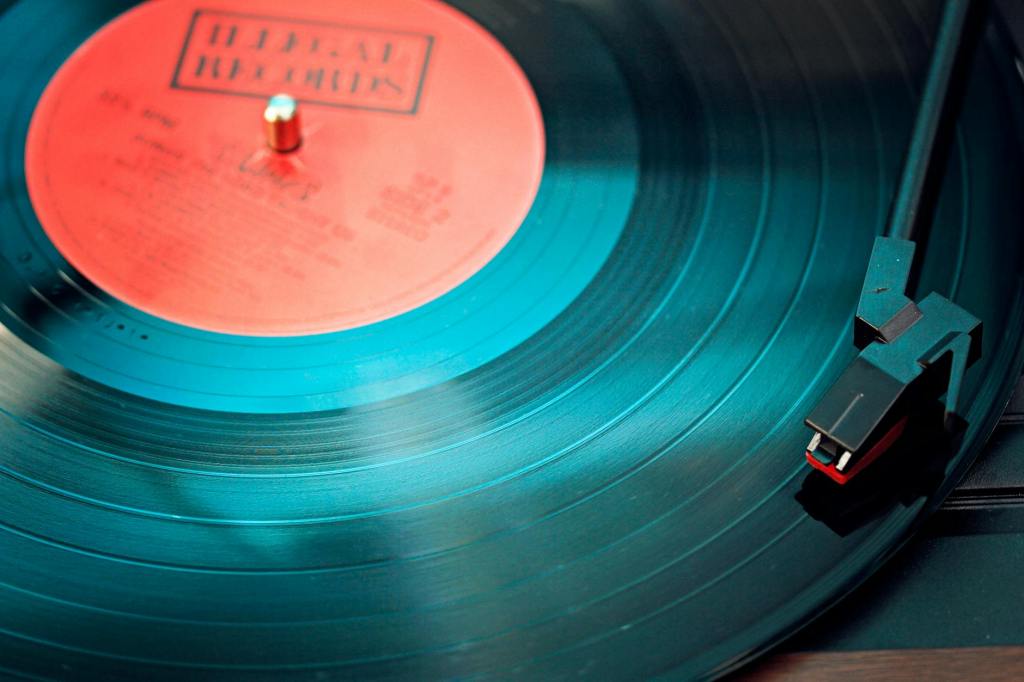
I don’t ever remember a time in my life without music. My dad had a very fancy entertainment system and I used to watch in fascination as he carefully placed a vinyl record onto the spindle of the record player and gently placed the needle into the groove.
My brother and I loved it when he played his records. We’d sing along to the likes of Rod Stewart and Diana Ross before attempting to recreate the depths of Johnny Cash’s resonant tone.
My mam, on the other hand, always played country and Scottish dance music.
I should clarify that when I say Scottish dance music, I’m talking about the one with accordions rather than bands like the KLF or the Shamen. She was less keen on them although she was prepared to listen to the KLF when Tammy Wynette joined them on the single ‘Justified and Ancient’.
Music was played constantly in our house. Every family gathering involved some tunes which were inevitably followed by dancing.
Even without a gathering, my parents could often be found in the kitchen on a Saturday night dancing a Highland Scottische as they listened to Robbie Shepherd’s ‘Take the Floor’ on the radio.
There are very few memories in my life that don’t come with an accompanying soundtrack.
And that’s the power of music.
It’s a time machine that can transport us back to a particular point in time.
The opening bars of a familiar song can bring to mind a moment in our lives and suddenly we’re back, feeling the same emotions all over again.
Music has the ability to transform us, it can bring us joy or it can make us cry.
It brings us together as humans – let’s be honest, going to a gig is never just about seeing a band or performer play live. It’s as much about sharing the experience with people who love them just as much as we do.
It gives us a sense of belonging.
Music and identity
Music is a part of our identity that tells the world who we are, where we came from and what we hope to be.
If we had a happy upbringing, we often maintain a fondness for the music that our parents played because it reminds us of our childhood.
Songs from our teenage years remind us not only of the challenges of being a teenager, but also of the anticipation that we felt for the future, the headiness of a world full of excitement and hope.
As we move through life, songs take on new meanings. What we once saw as just a good tune now becomes more relatable as we find ourselves matching our personal experiences to the lyrics.
We smile ecstatically when we hear a song that reminds us of good times with our friends, and we cry when we listen to songs that remind us of a painful breakup or the death of a loved one.
Mix tapes and playlists
Nowadays we all create playlists on our preferred streaming service but back in the day we used to record actual mix tapes. These would be made for a variety of occasions such as a road trip or a party.
And of course, there was the infamous mix tape for a romantic partner.
Mix tapes are a beautiful way to express the depth of our feelings without the discomfort of saying the actual words.
I’ve often wondered if mix tapes are so popular because there are aren’t enough words in our language to express the full spectrum of our emotions.
Perhaps the vibrations in music can reveal more than anything verbal ever could.
I must confess to never having created my own mix tape for a boyfriend but I’ve had a few made for me over the years.
They were always interesting because they not only told me about the kind of music my partner liked, but they also demonstrated a level of thoughtfulness and care that might not always have been communicated verbally.
When I married my second husband we created a mix tape (on a CD) to give as a wedding favour to our guests. It had a selection of songs that held meaning for us as a couple, and it was really well received.
In fact, some of our wedding guests still enjoy the CD, many years after the end of our marriage.
Of course, nowadays I have playlists on my streaming service. I have a drivetime playlist for me to belt out my songs when I’m in the car. I have a classical collection, a dancing collection, a cooking collection and a chill out collection.
I also have a writing collection filled with mostly instrumental music.
I like to use music when I’m writing to get me into a slightly fevered state which helps to get my creativity flowing.
I’m open to all genres for my writing playlist – the only rule is that it has to invoke an intense response in me. It needs to be a song with an insistent hook or beat that builds to a climax.
Similarly I’ve found that listening to a song on repeat also builds the intensity, allowing me to access the creative part of my brain more easily.
For example, whilst writing this post, I listened to Avril 14th by Aphex Twin 33 times in a row.
Play it again
My ability to listen to a song on a continuous loop is extraordinary. I used to worry that there was something wrong with me but I’ve since discovered that most people do this.
Well, most people I know do it – perhaps not 33 times in a row but to some degree.
I imagine there are many reasons for listening to a song on repeat, one of which is presumably that we get a dopamine hit, but I wonder if there is also an element of discovering something new each time you listen to it.
Maybe each time we listen, it gives us a chance to appreciate a different element to the song or maybe it’s just the dopamine hit.
Speaking of discovering something new, I have to admit that I’m a big fan of a cover version, particularly if the cover is in a different genre to the original.
I know this can be a controversial topic but allow me to explain.
Cover versions help me to see the song from a different perspective and, often, I find a new meaning in the lyrics.
In fact, there are quite a few songs where I prefer the cover version to the original.
My only gripe with cover versions is when someone does an exact copy of the original. I don’t see the point of it. I want to hear a different twist.
Take the song Tainted Love, widely attributed to Soft Cell but actually originally recorded by Gloria Jones in 1964.
Hers is a powerful soul version (and my personal favourite) whilst Soft Cell did their synth pop sound which I also loved.
Then Marilyn Manson did his version and I really disliked it, but I respected him for taking it to a different place. Even if it was a place I didn’t want to go to.
I listened to it again whilst writing this post and I don’t hate it as much as I used to, which might be a sign of my evolving tastes or perhaps I’m just feeling more tolerant.
Diverse tastes
I mentioned before that I have a diverse taste in music. Whenever anyone asks me what I like, I find it hard to answer.
I used to say that I liked pretty much everything except jazz, however my second husband challenged me on this point when I said it to him.
‘But you love Nat King Cole, don’t you?’ he asked, looking somewhat perplexed.
I nodded my head in agreement.
‘And Nina Simone?’
I nodded again.
‘And Ella Fitzgerald?’
More nodding.
‘Frank Sinatra? Billie Holliday? Louis Armstrong?’
‘Ah,’ I replied, realisation suddenly dawning on me. ‘So you’re saying that I do like jazz, I just don’t like the meandering noodling.’
He smiled in satisfaction, happy to have helped me on my musical journey.
I’m still not overly keen on the jazz noodling which is a shame because I like the idea of being a cool cat.
Unfortunately, I reckon the only place I’ll ever be a cool cat is in my own imagination.
Healing through music
Like many people, I have used music as a form of therapy. I often find myself listening to certain types of playlists depending on what emotion I want to express.
When I want to release emotion I’ll listen to songs that I know will make me cry.
If I feel frustrated, I’ll put on some rave music and dance it out.
When I feel lost and adrift I’ll listen to some Scottish dance music which never fails to make me smile and provides a comforting reminder of my roots.
Interestingly, I found myself listening to a lot more Scottish music when I moved to London, perhaps feeling an urge to cling onto my Scottish identity.
I remember saying to my English pal that I was worried I would lose my Scottish accent and she laughed so hard I thought she would do herself an injury.
‘Don’t worry, babe,’ she reassured me, ‘I don’t think you’re in any danger of losing your Scottish accent.’
I didn’t think I had a particularly strong accent but I suspect it may have become more pronounced when I was down there which was an illuminating realisation about my thoughts towards my heritage
Musical DNA
Scottish dance music – or ceilidh music – has always had an ability to pull on my heart strings in a way I don’t fully understand.
The sound of a fiddle seems to have almost a visceral effect on me. My heart aches and I feel happy and sad at the same time.
Perhaps that’s part of my Gaelic DNA – an underlying melancholy for a time and place that no longer exists.
There is a long-running joke about the sadness of Gaelic songs and how they’re always filled with tragedy and loss. I only have a little bit of Gaelic so I don’t always understand the lyrics but I usually learn them from someone.
A few days before my mam died, we sat down together to plan her funeral.
She told me that she wanted to include a Gaelic song called ‘An Ataireachd Ard’. It was a song she felt a particular connection to having sung it at the Royal National Mòd when she was a teenager.
I knew the song, I’d heard it played many times. It had never occurred to me to check the lyrics. This was many years ago, in the early days of the internet when there wasn’t the same level of access to information.
On the morning of her funeral I stood in my kitchen and had an overwhelming desire to play ‘The Blood is Strong’ album by Capercaillie.
Perhaps it was because it was an album I associated with my mam. Perhaps something was telling me I needed to hear it.
As the album played, I realised that ‘An Ataireachd Ard’ was included in the song list so I decided to fast-forward the tape to listen to it.
As I listened to this haunting song, I absentmindedly checked the sleeve notes of the cassette tape and realised that the lyrics were printed in English as well as Gaelic.
I didn’t know the meaning of the song other than it was about the surge of the sea so I carefully consulted the English translation, feeling my throat choke as I read the words of the last verse:
But I shall go away, never to return to you
My age and physical appearance presage the shortness of my days
When it’s time for me to be laid out in the cold slumber of death
Make up my bed where I can hear the surge of the sea *
I broke down completely.
Damn those Gaels and their melancholy!
*Based on the poem by Dòmhnall MacÌiomhair
 Dozy Writes
Leave a comment